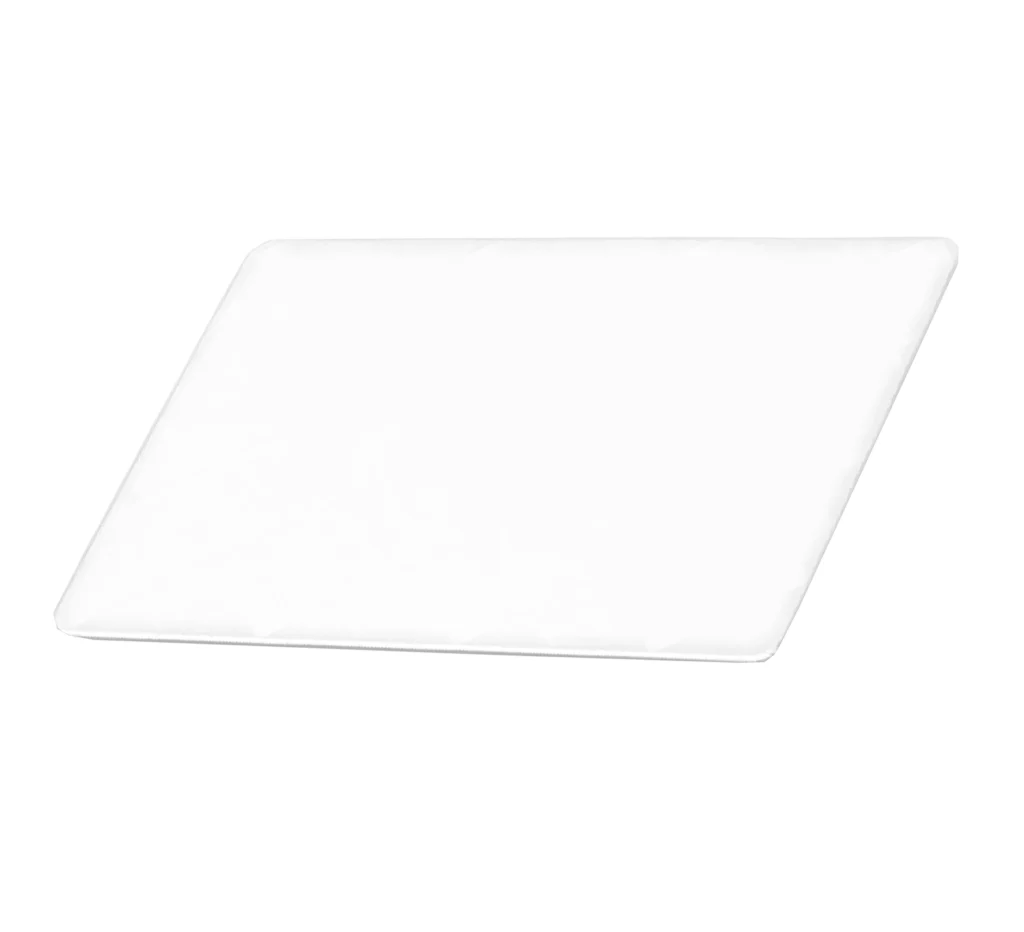
Convenient RFID proximity cards

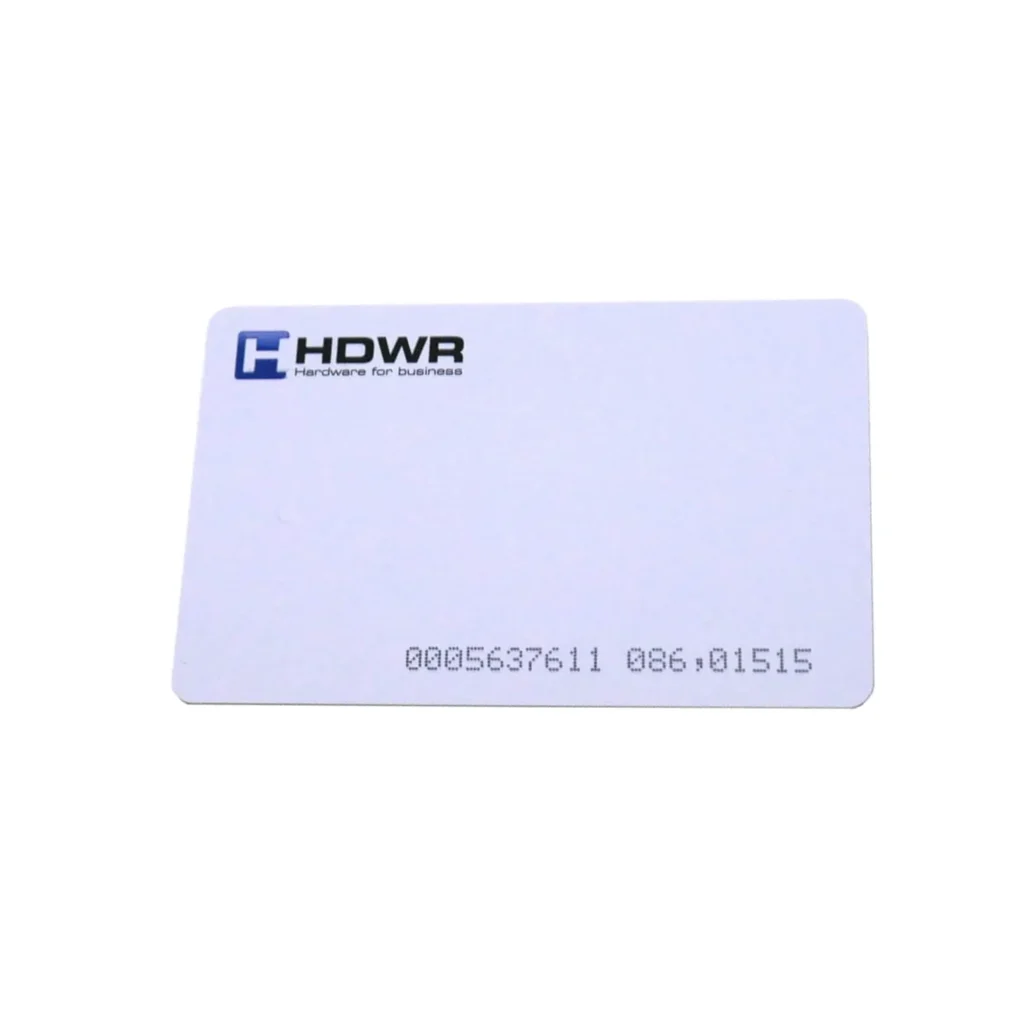
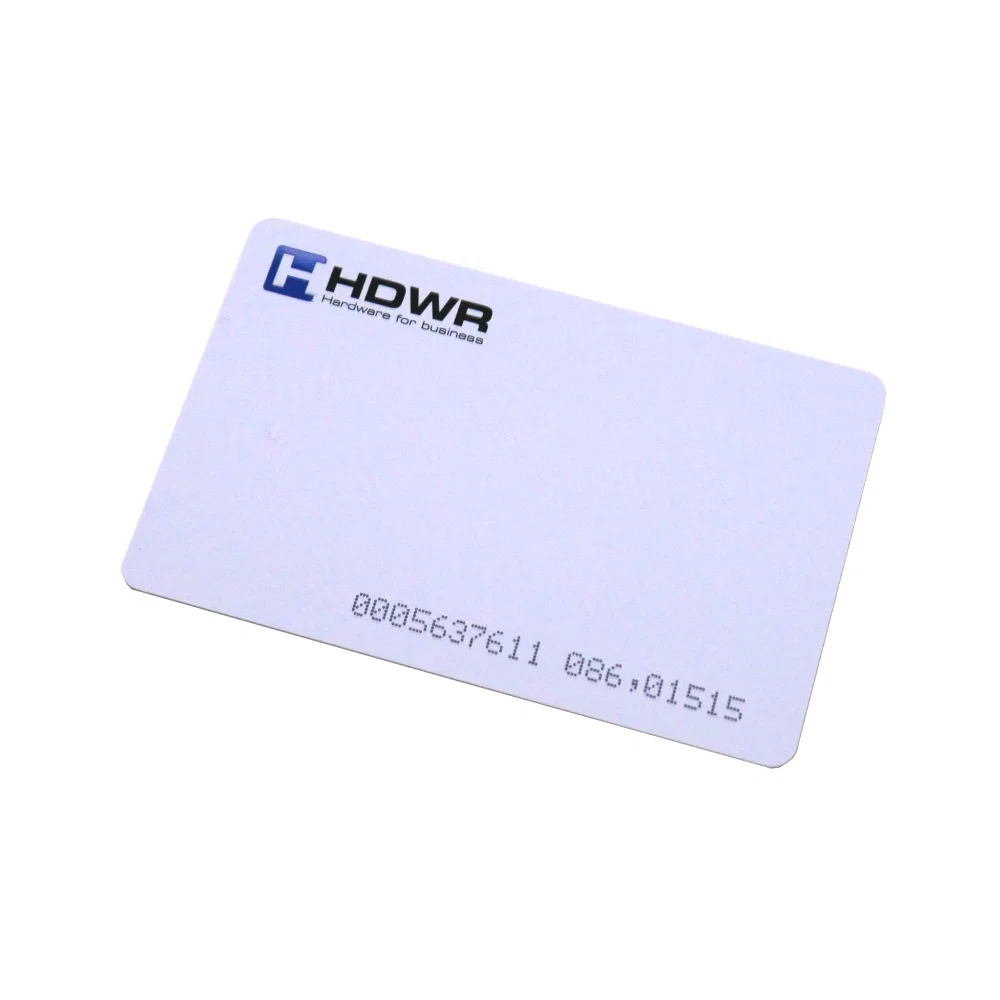
RFID card is a practical and convenient passive tag used for automatic radio identification. Compact in size, it easily fits into any wallet and can be personalized with graphics, company logos or individual inscriptions. The card is durable, easy to use, and can be successfully applied as an access tool in buildings equipped with access control systems, ensuring secure and efficient entry management.

  • Frequency: 125 kHz
  • Card type: blank (unencoded)
  • Chip: TK4100
  • Material: PVC
  • Finish: glossy white
  • Dimensions: 86 x 54 x 1 mm
  • Quantity: 10 cards per set

16.56(13.46 net)

  • Frequency: 13.56 MHz
  • Card type: encoded (unique 10-digit code)
  • Chip: Mifare 1K S50
  • Material: PVC
  • Finish: glossy white
  • Dimensions: 86 x 54 x 1 mm
  • Quantity: 10 cards per set

16.56(13.46 net)

Set of 10 RFID cards, encoded, 125kHz, white, HD-RWC01
  • Set contents: 10 x RFID card, encoded
  • Operating frequency: 125 kHz
  • Chip type: TK4100
  • Material: PVC
  • Finish: white gloss (printable)
  • Dimensions: 86 x 54 x 1 mm
  • Identification code: unique, 10-digit, non-rewritable

18.96(15.41 net)

Set of 15 RFID key cards, encoded, 125kHz UNIQUE, white pritable, radio frequency identyfication HD-RWC01
  • Operating Frequency: 125 kHz (UNIQUE EM)
  • Material: PVC
  • Finish: white gloss
  • Device Dimensions: 86 x 54 x 1 mm

28.56(23.22 net)

The World of RFID Cards

RFID cards are a modern technological tool that uses radio waves to store and transmit data without the need for physical contact. Thanks to their ability to quickly and securely transfer information, RFID cards have become a cornerstone of many identification and transaction systems, ranging from access control to cashless payments and supply chain management. Their versatility and efficiency make them increasingly used across various industries, offering significant benefits to both individual users and organizations. RFID cards can be encoded, meaning they have a unique code, or unencoded, which means they do not have a code. It’s important to note that encoded cards cannot be re-encoded with a different code.

Features of RFID Cards:
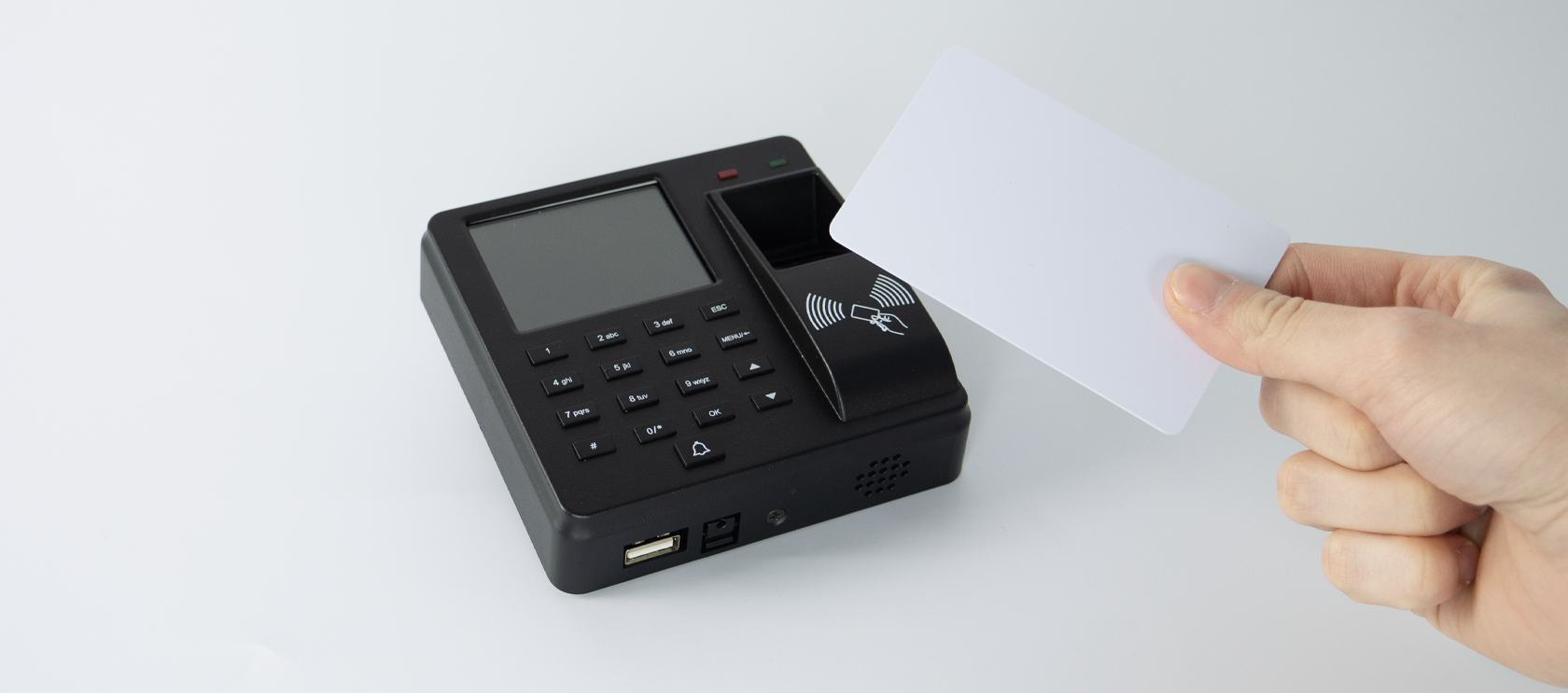
  • Contactless Data Reading: RFID cards allow data to be read by a reader from a specified distance, increasing speed and ease of use.
  • Data Capacity: Depending on the type of card, they can store a variety of information, from simple identifiers to complex data such as transaction histories or personal information.
  • Durability: RFID cards do not require direct contact with the reader, minimizing the risk of physical wear and tear.

HD-RWC01 RFID proximity card for access control from HDWR with time logger.

Benefits of Using RFID Cards:

Above all, speed and efficiency. RFID proximity cards enable fast data transmission to an external device. Used for sending information to an RFID reader, they allow, for example, convenient and almost instantaneous unlocking of access to rooms or buildings, and when paired with a time recorder, they offer simple logging of employees’ entry and exit times.
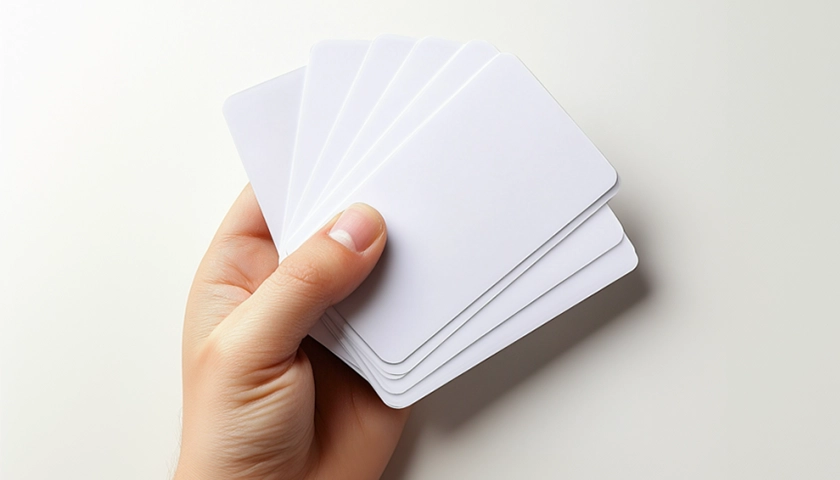
Additionally, the use of RFID cards in various processes improves accuracy. Automatic data reading from RFID cards eliminates human errors associated with manual data entry.

UNIQUE 125 kHz and MIFARE 13.56 MHz proximity cards.