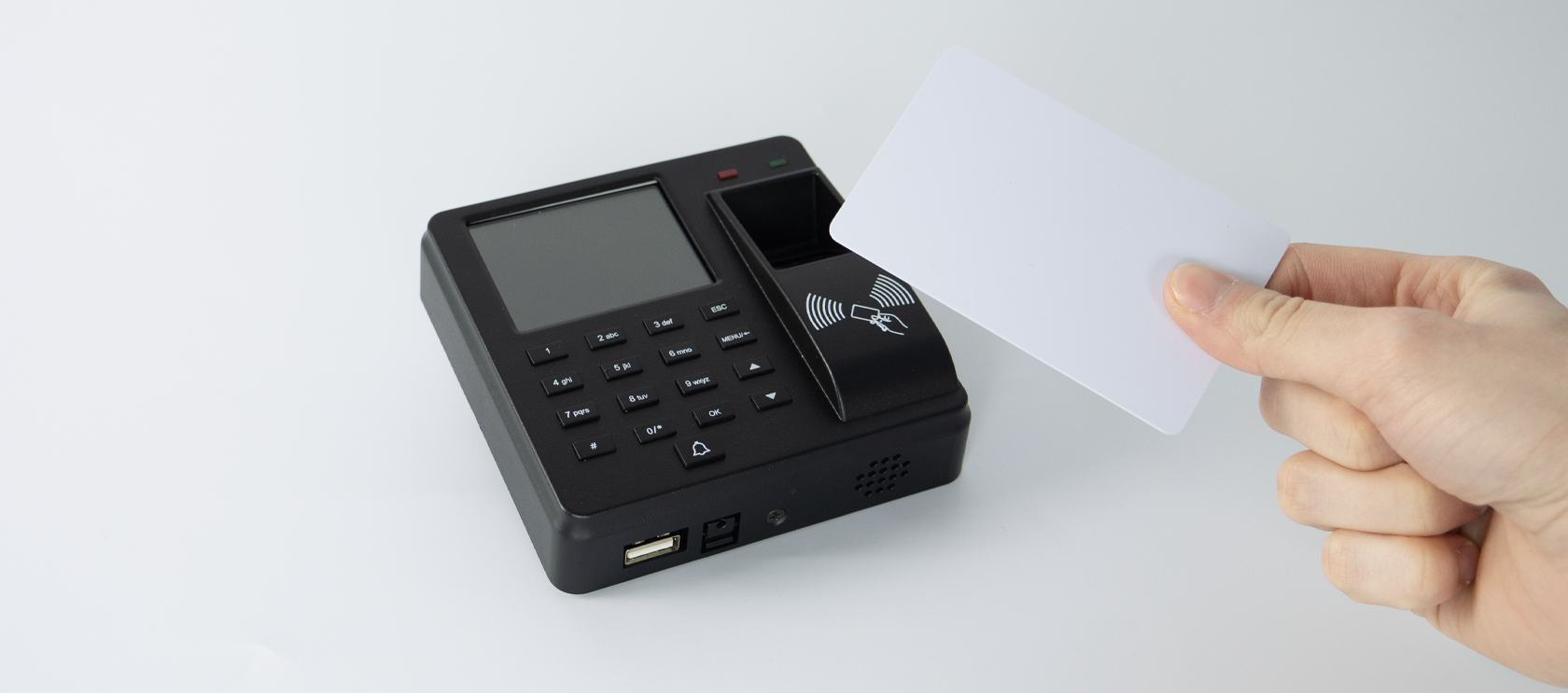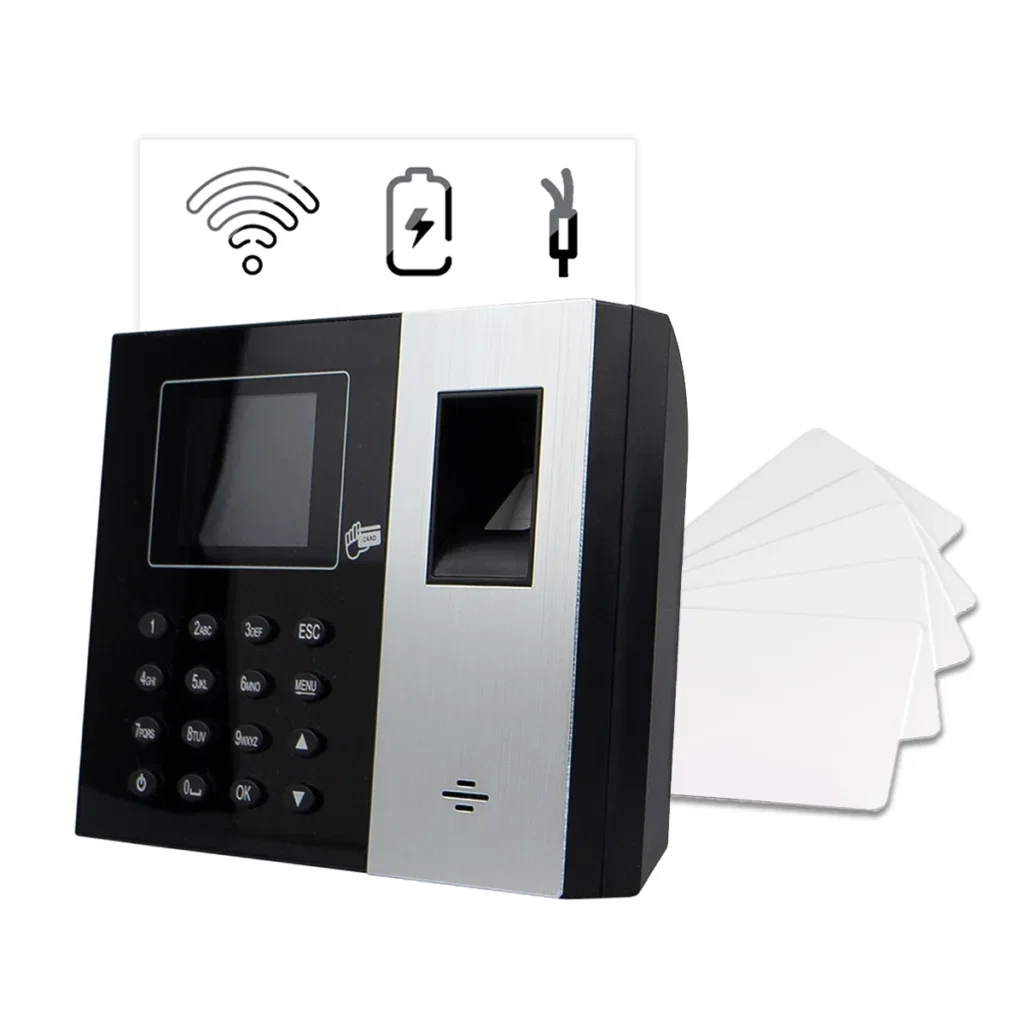
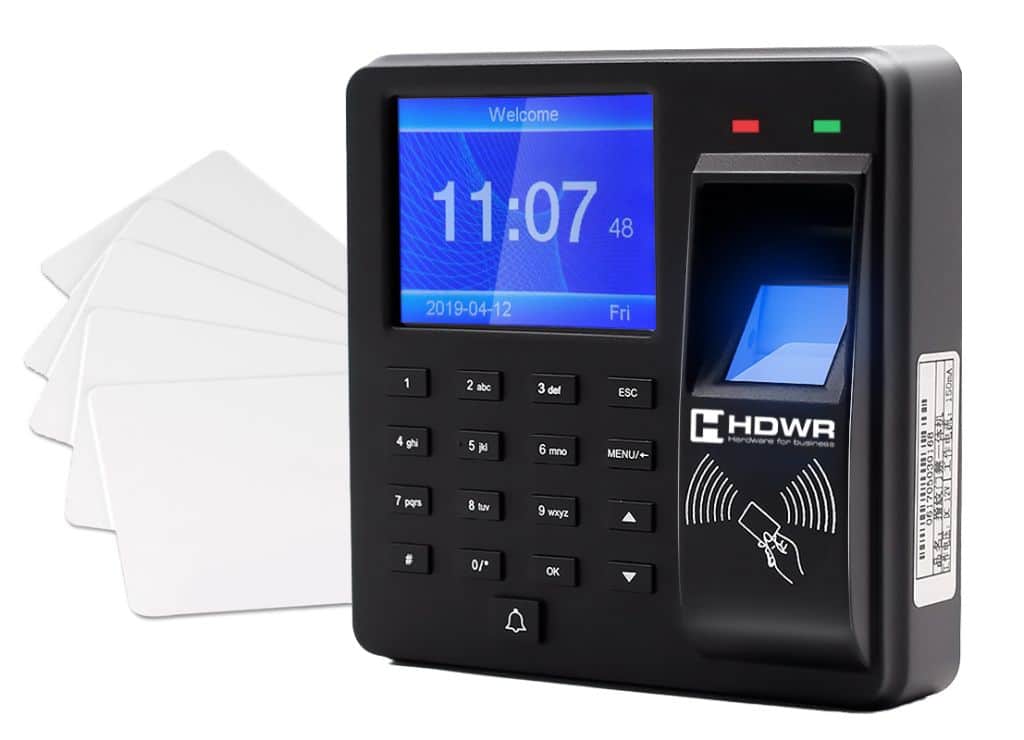
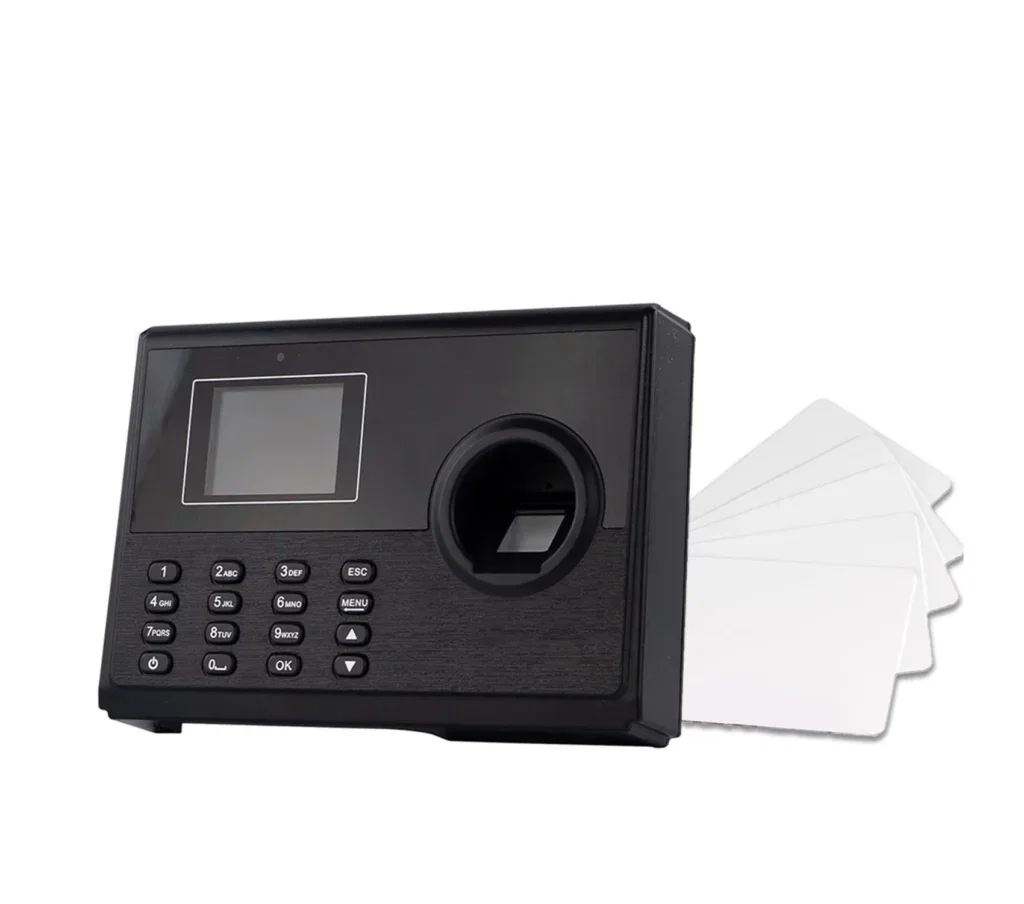
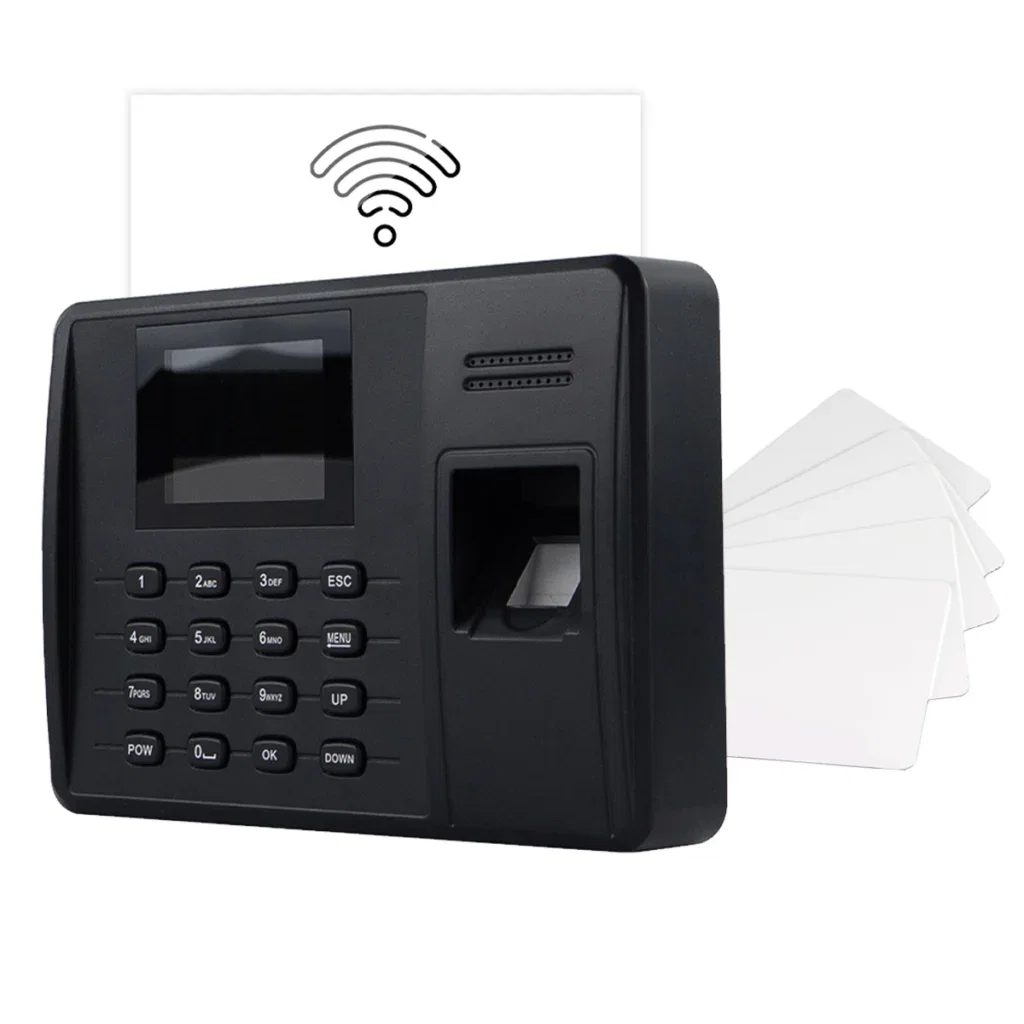
A working time recorder is a device mounted at the entrance that registers the moment an employee arrives and leaves. It works on its own: the readings land in the internal memory and are read out over USB or a network, without installing any software. Depending on the model, memory holds up to a thousand employees and a hundred thousand entries, and reports on attendance, absence, lateness or leave can be exported straight to a spreadsheet.
Identification is normally done with an RFID card or key fob at 125 kHz, and higher models add a fingerprint and a PIN code, which lets you combine methods and raise the level of security. Devices with Wiegand support also work as an element of access control – connected to an electric strike they open the door only to an authorised person.

An RFID card is a passive credential the size of a payment card. It has no battery: it draws energy from the reader’s field and returns its unique identification code, which the system links to a specific employee. Cards at 125 kHz are read from a couple of centimetres, are resistant to everyday handling and fit into a wallet or a badge holder. A blank white surface takes printing, so the card can double as a company ID badge.